American Artist

Grew Up in Wyoming.
Made It in LA.
Still Working.


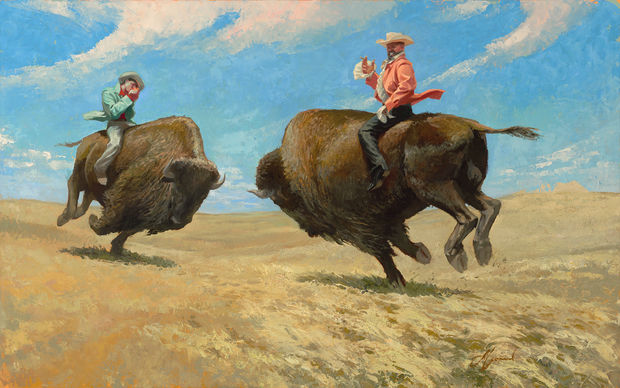
Twenty-five years in. The work is figurative, cinematic, and rooted in the American West — figures on the edge of something, landscapes that carry their own weight, backgrounds that let your mind do the rest. The long way around was the only way.

  • The Beginning The Long Way Around Gabe grew up in a small oil field camp outside Casper, Wyoming — the...

    The Beginning

    The Long Way Around


    Gabe grew up in a small oil field camp outside Casper, Wyoming — the kind of place that leaves a mark whether you notice it or not. He came to LA in 1998 with $1,900, a car full of art supplies, and no plan beyond not going home. The animation industry wasn't hiring. He got a job at Macy's, started selling color copies of his paintings on the Venice Beach boardwalk on weekends, and made more money there than at the store. So he quit.

    That led to a decade of boardwalk selling, art festivals, college campuses, and slowly figuring out how galleries actually work. In 2005, he bet $12,000 on a booth at the New York Art Expo. He came home with $12 and a return ticket. He was back at Venice the following weekend. Twenty-five years in, the work is in galleries across North America. He hasn't quit yet.

    "Paying your dues is the only job you'll never lose."
  • The Work

    Welcome to Town


    For most of his career, Gabe's paintings placed figures in abstracted, undefined environments — the background doing its own kind of emotional work, letting the viewer's mind fill in the rest. The landscape was always implied.

    Going back to Wyoming — to the sandstone rocks above the town where he grew up, now a ghost town — it occurred to him that he wasn't just visiting the place. He was the place. Welcome to Town is the result: a body of work where the environment is as much a character as the figures in it. Where you came from informs who you are. The stage and the actors carry equal weight.

  • The Philosophy

    Comedy on the Cusp of Tragedy


    The paintings live somewhere between Western myth and fever dream. Pre-apocalyptic — not doom, but the moment before the moment. The world burning softly behind figures who aren't looking back. There's rebirth in that framing. Not desperation.

    The abstracted backgrounds aren't decoration. They're the part doing most of the talking — and your mind fills them in with whatever you're carrying. That's always been the trick. Discover what you're doing as you go. Being too deliberate causes the work to go flat. The feeling is the point.

    "Spare us the details."